
Intel EE80C186EB25: The Embedded Microprocessor Powering Industrial Systems of the 1990s
The 1990s marked a pivotal era in industrial automation, characterized by the transition from purely electromechanical control to sophisticated digital systems. At the heart of this revolution, embedded within countless factory machines, network routers, medical devices, and transportation systems, was the Intel EE80C186EB25 microprocessor. This chip was not a headline-grabbing consumer CPU but a robust, reliable workhorse engineered for the demanding world of embedded applications.
As an enhanced version of the iconic Intel 80186 architecture, the EE80C186EB25 was specifically designed for integration and control. Unlike its desktop-oriented cousins, this component integrated numerous critical system functions onto a single piece of silicon. It featured a high level of on-chip integration, including two Direct Memory Access (DMA) channels, three 16-bit timers, and a programmable interrupt controller. This consolidation drastically reduced the number of supporting chips required, leading to simpler, more compact, and more reliable printed circuit board (PCB) designs—a critical advantage for space-constrained industrial equipment.
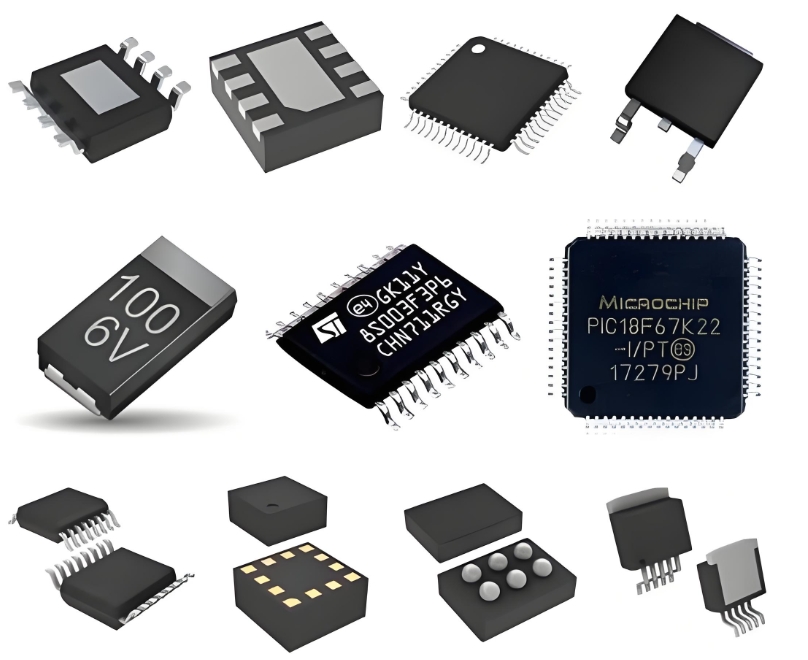
The "EB25" suffix denoted key characteristics: it was a 25 MHz version of the CHMOS III-E (Electrically Erasable) processor. This speed, impressive for its time in this class, provided the necessary computational muscle for real-time control tasks. Furthermore, its low power consumption and extended temperature range made it exceptionally suited for harsh factory environments where heat, dust, and electrical noise were common challenges. System designers could rely on it to perform consistently where less robust components would fail.
A defining feature of the EE80C186EB25 was its dedicated and flexible memory management. It incorporated a Chip Select Unit (CSU) that generated ready-to-use chip select signals for up to 13 memory blocks, significantly simplifying memory interface design and accelerating product development cycles. This capability was invaluable for creating systems with a mix of EPROM, SRAM, and peripheral chips without requiring additional glue logic.
Throughout the decade, this microprocessor became the invisible brain behind a vast array of critical systems. It powered Programmable Logic Controllers (PLCs) that automated assembly lines, managed data communication in early network bridges and routers, and controlled complex medical diagnostic instruments. Its proven reliability and long-term availability cemented its status as a preferred choice for engineers designing products with lifecycles spanning many years, even decades.
ICGOOODFIND: The Intel EE80C186EB25 stands as a testament to a different kind of processing power: not raw speed for multimedia, but unwavering reliability, seamless integration, and deterministic performance for mission-critical systems. It was a foundational silicon building block that helped automate the world, demonstrating that the most impactful technology often operates unseen, reliably performing its duty deep within the machines that power modern industry.
Keywords: Embedded Systems, Industrial Automation, Intel 80186 Architecture, On-Chip Integration, Real-Time Control.

